
What if practitioners could better understand an athlete’s bone health before an issue becomes an injury that keeps them from training or competition?
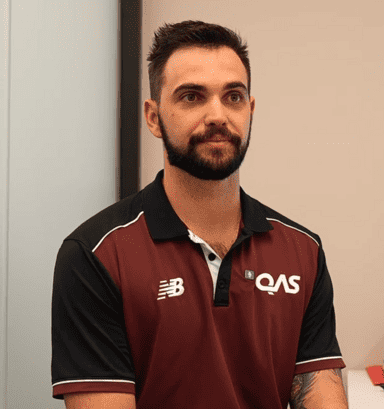
That question is at the heart of Nicholas Berlin’s PhD research, DXA and Bone Health in High Performance Sport, undertaken in partnership with the Queensland Academy of Sport (QAS) and Australian Catholic University (ACU).
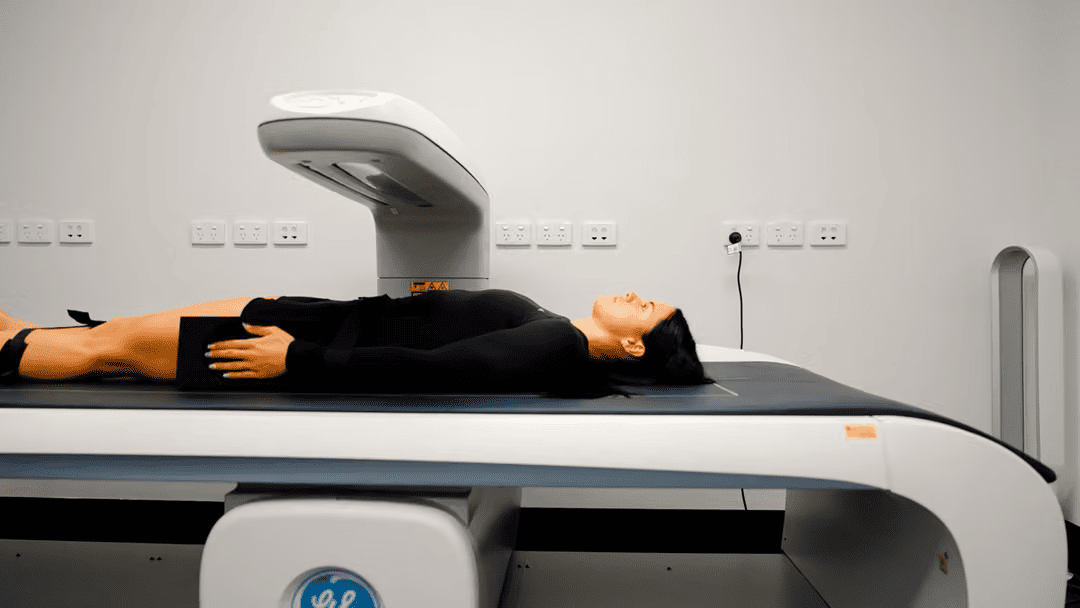
He investigated how dual-energy X-ray absorptiometry (DXA), technology commonly used in clinical settings, could be better applied to understand bone health in high performance athletes.
“We’re really trying to see if we can use DXA as more of a preventative tool or at least to provide some information before anything like a fracture occurs,” Nicholas said.
DXA can measure bone mineral density and body composition, but much of the existing evidence and reference data is based on the general population. High performance athletes experience very different physical and training demands.
For Nicholas, that presented an opportunity to build a better understanding of what the data means for athletes.
Through the partnership with ACU and with expert guidance from Professor Louise Burke, Nicholas was able to connect his research with athletes and practitioners working in high performance sport.
“Partnering with the QAS gives me access to this really niche population of some of the best athletes in the state, the country, the world,” Nicholas said.
His research examined factors that can influence DXA results, including athlete positioning, equipment calibration, exercise and dietary intake.
Nicholas also explored the need for athlete-specific reference data, recognising athletes’ bone characteristics can differ considerably from those of the general population.
But the value of the work extends beyond the scan itself.
Within the QAS, research can connect with expertise across sports nutrition, medicine and other areas of performance support, helping practitioners consider different pieces of information as part of a broader understanding of the athlete.
QAS Sports Dietitian Kerry Leech is one example of that connection in practice. DXA data can sit alongside an athlete’s nutrition, health, training and performance information, giving practitioners another piece of the picture when supporting individual athlete needs.
It’s this connection between research and practice that demonstrates the value of a multidisciplinary high performance environment. By bringing together expertise from across the QAS, universities, government agencies and industry partners, the Research and Innovation team helps investigate real-world challenges faced by athletes, coaches and performance teams.
Nicholas’s work with the QAS and ACU is one example of this approach in action. His research was shaped by the needs of high performance sport, involved an athlete population rarely represented in traditional research and drew on the practical expertise of QAS practitioners. It also contributes to greater knowledge and understanding of high performance athletes.
That’s where Research and Innovation adds value: bringing the right people, evidence and expertise together around the athlete to help inform their health, preparation and performance when it matters.
Explore Research & Innovation at the QAS.